
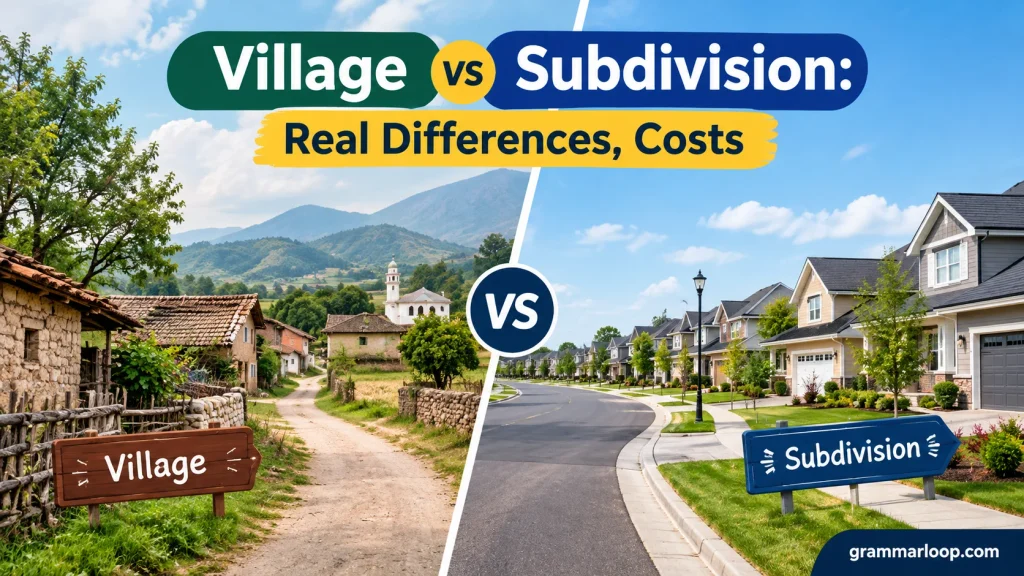
When comparing a village vs subdivision, it is important to understand how these two places differ in terms of location, lifestyle, property prices, and daily expenses. A village is usually a smaller community where people enjoy a quiet environment, open spaces, and a more traditional way of living. In contrast, a subdivision is generally a planned area divided into smaller plots of land for homes, roads, and other developments. Subdivisions are often found near towns or cities, making them convenient for people who need access to modern facilities. However, the exact meaning of these terms can vary depending on the country, region, and local government system.
One major difference between a village and a subdivision is the cost of living. Villages often offer lower land prices, affordable housing, and fewer daily expenses, although prices depend on the location and available facilities. People living in villages may have more space, larger yards, and stronger connections with their neighbors. Subdivisions, on the other hand, may have planned streets, organized plots, and access to utilities such as electricity, water, and drainage. Some modern subdivisions also include parks, security, and community facilities, which can increase property prices and maintenance fees. Therefore, choosing between these options requires comparing both the initial property cost and the long-term expenses associated with living there.
Understanding the real differences between a village and a subdivision can help you make a better decision when buying land, building a house, or choosing a place to live. If you prefer a peaceful lifestyle, more open space, and potentially affordable property, a village might be a suitable option. However, if you value organized development, convenient access, and modern neighborhood facilities, a subdivision may better match your needs. You should also consider road conditions, schools, healthcare, employment opportunities, and transportation before making your choice. Ultimately, the best option depends on your budget, personal preferences, and future plans. By comparing these factors carefully, you can decide which living environment offers the best balance of comfort, affordability, and convenience for you.
What Is a Village vs Subdivision in Real Terms
What a Village Really Looks Like
A village develops naturally over time. Families build homes near each other, usually based on kinship or shared land. There is little formal planning.
Key characteristics:
- Houses grow without strict layout rules
- Roads often develop after housing, not before
- Economy depends on farming, livestock, or small trade
- Local governance relies on informal systems or basic municipal support
In many regions like Punjab, villages still rely on agriculture income. A large portion of households either farm land directly or lease it out.
A village does not follow a master plan. It evolves like a living organism.
What a Subdivision Really Means
A subdivision follows a planned structure. Developers design it before people move in.
Key characteristics:
- Pre-planned roads and blocks
- Legal zoning and ownership structure
- Utility systems installed before occupancy
- Managed community rules in many cases
A subdivision usually sits near a city or expanding urban zone. Developers build it to attract middle and upper-middle income buyers who want structure and convenience.
Unlike villages, subdivisions grow from a blueprint, not tradition.
Village vs Subdivision at a Glance
Here’s a clear comparison to ground everything:
| Feature | Village | Subdivision |
| Planning | Organic growth | Pre-planned layout |
| Roads | Variable quality | Designed and paved |
| Utilities | Inconsistent | Structured supply |
| Cost of land | Lower | Higher |
| Maintenance | Individual responsibility | Shared or managed |
| Privacy | High openness, low privacy | Higher privacy |
| Community | Tight-knit | Mixed and distant |
| Resale value | Unpredictable | More stable |
This table shows a simple truth: villages prioritize tradition and flexibility, while subdivisions prioritize structure and convenience.
Lifestyle Differences in Village vs Subdivision Living
Daily Life in a Village
Life in a village moves at a natural rhythm. You wake up with sunlight, not alarms tied to traffic jams or office hours.
Typical daily pattern:
- Early morning agricultural activity
- Strong family-based routines
- Limited commercial distractions
- Social interaction happens organically
People often share resources. For example, one neighbor may borrow farming tools from another without formal agreements.
A farmer once described it simply:
“In the village, your neighbor is not just next door. He’s part of your daily survival.”
That statement captures the social depth of village life.
However, this lifestyle also brings limits:
- Fewer entertainment options
- Limited healthcare access
- Longer travel for education or jobs
Daily Life in a Subdivision
Subdivision life feels structured and predictable. You rely less on community help and more on systems.
Typical daily pattern:
- Commute to work or city centers
- Scheduled utilities and services
- Access to nearby schools, shops, and clinics
- Lower dependence on neighbors
You gain privacy, but you lose familiarity.
For example, in many housing societies near cities like Lahore or Islamabad, people may live next to each other for years without knowing each other’s full names.
That’s the trade-off: comfort over closeness.
Key Lifestyle Trade-Off
The core difference comes down to this:
- Village = community depth and shared living
- Subdivision = privacy and individual convenience
Neither option wins universally. It depends on how you define “better life.”
Cost Breakdown: Village vs Subdivision Real Economics
Money often becomes the deciding factor in the village vs subdivision debate.
But most people only look at land price. That’s a mistake. You need to look at total cost.
Land and Property Costs
In many parts of Punjab, Pakistan:
- Village land: approximately PKR 300,000 to 2,000,000 per acre depending on fertility and location
- Residential village plots: often PKR 200,000 to 1,500,000 for small parcels
- Subdivision plots: commonly PKR 2,000,000 to 20,000,000+ depending on city proximity
Subdivisions cost more because:
- Developers add infrastructure costs
- Legal documentation increases value
- Demand concentrates near urban areas
Hidden Costs People Ignore
In Villages:
- Water pumps or boreholes
- Electricity backups like generators or solar systems
- Road access improvements
- Transport costs to cities
In Subdivisions:
- Maintenance fees
- Security charges
- Society development funds
- Utility connection charges
A family may buy cheaper land in a village, then spend years upgrading basic infrastructure. Meanwhile, a subdivision buyer pays upfront for convenience.
Long-Term Cost Reality
Over 10–15 years:
- Villages can become expensive if infrastructure remains weak
- Subdivisions maintain predictable costs but grow in property value
The real question is not “what is cheaper?”
It is “what cost do you prefer paying—upfront or over time?”
Infrastructure: The Hidden Divider Between Village and Subdivision
Utilities and Services
Villages often struggle with:
- Irregular electricity supply
- Limited gas pipelines
- Dependence on groundwater
- Slow internet speeds
Subdivisions usually provide:
- Stable electricity grids
- Planned water systems
- Fiber or broadband internet options
- Underground or regulated utilities
For example, internet speeds in rural villages often depend on mobile networks, while subdivisions near cities access fiber connections with higher stability.
Roads and Transport
Village roads often:
- Lack paving
- Depend on local maintenance
- Become difficult during heavy rain
Subdivision roads:
- Follow engineered layouts
- Include drainage systems
- Support higher traffic flow
This difference directly affects daily commuting time and transport costs.
Public Services
Subdivisions often provide faster access to:
- Schools
- Clinics
- Emergency services
Villages may require travel of 10–40 kilometers for similar facilities, depending on region.
Social Structure: Community vs Privacy
Village Social Life
Villages build strong social bonds. People often:
- Know extended families in the area
- Share food, tools, and labor
- Participate in cultural gatherings
This creates strong support systems during emergencies.
However, privacy becomes limited. Personal matters rarely stay personal.
Subdivision Social Life
Subdivisions shift toward privacy. You may:
- Interact less with neighbors
- Keep personal boundaries stronger
- Participate only in formal community events
This suits people who value independence.
But it can feel isolated, especially for newcomers.
Read more: Currier vs Courier: Meaning, Difference, Examples
Safety and Governance
Village Safety Reality
Villages rely on:
- Community-based conflict resolution
- Local leadership systems
- Informal enforcement
Crime rates vary widely by region. Some villages remain extremely safe due to familiarity, while others face disputes over land or resources.
Subdivision Security Systems
Subdivisions often include:
- Gated entrances
- Security guards
- CCTV monitoring
- Formal complaint systems
This creates predictable security. However, it also adds recurring cost.
Education and Opportunity Access
Education often becomes a deciding factor in village vs subdivision living.
Village Access:
- Limited school quality in many areas
- Longer travel times
- Fewer private institutions
Subdivision Access:
- Proximity to private schools
- Better transport to universities
- Easier access to coaching centers
A student living in a subdivision near a city may save 1–2 hours daily in travel compared to a rural student.
That time difference compounds over years.
Environmental Conditions
Village Environment
Villages often offer:
- Open land and fresh air
- Agricultural surroundings
- Lower industrial pollution
But they may also face:
- Crop burning smoke
- Animal waste issues
- Dust from unpaved roads
Subdivision Environment
Subdivisions offer:
- Planned green belts (in better societies)
- Controlled landscaping
But risks include:
- Urban smog exposure
- Traffic-related pollution
- Heat island effects near cities
Property Control and Flexibility
Village Flexibility
Villages usually allow:
- Flexible construction
- Land use freedom
- Expansion without strict rules
You can build or modify structures more freely.
Subdivision Restrictions
Subdivisions enforce:
- Architectural guidelines
- Construction approvals
- Zoning restrictions
This protects property value but limits freedom.
Investment Perspective: Where Does Money Grow Better?
This section matters most for long-term planners.
Village Investment Reality
Villages behave like speculative land markets:
- Low entry cost
- High uncertainty
- Value depends on nearby development
If a highway or industrial zone develops nearby, land value can multiply quickly.
But if nothing changes, appreciation stays slow.
Subdivision Investment Reality
Subdivisions offer:
- Stable appreciation
- Higher liquidity
- Strong demand from urban buyers
However, overpriced societies may stagnate if demand drops.
Simple Investment Comparison
| Factor | Village | Subdivision |
| Risk | High | Moderate |
| Growth potential | Very high or very low | Steady |
| Liquidity | Low | High |
| Predictability | Low | High |
Common Misconceptions About Village vs Subdivision
“Villages are always cheaper”
Not true. Hidden infrastructure costs can exceed expectations.
“Subdivisions always guarantee profit”
False. Location and demand still decide value.
“Village life is always peaceful”
Partially true, but disputes still happen, especially over land.
“Subdivisions are always safe”
Security depends on management quality, not just gates.
Case Study: Two Families, Two Different Choices
Family A: Village Investment Route
A family bought 2 acres in rural Punjab for farming. They spent less upfront but invested heavily in:
- Water systems
- Road access
- Transport costs
After 12 years, land value increased modestly. A nearby highway project later boosted value, but only partially.
Family B: Subdivision Purchase
Another family bought a plot in a suburban housing society. They paid higher upfront cost but enjoyed:
- Stable utilities
- Faster access to schools
- Higher resale demand
After 12 years, their property value increased steadily with market trends.
Key Insight
Village returns depend on external development shocks. Subdivision returns depend on market stability.
Conclusion:
Understanding the difference between a village vs subdivision helps you make an informed decision about where to live or invest in property. A village typically offers a peaceful atmosphere, open spaces, and potentially lower housing costs, while a subdivision often provides planned streets, organized plots, and access to modern facilities. However, the actual costs and available services depend on the location and local regulations.
Before choosing either option, compare property prices, utility access, transportation, and long-term maintenance expenses. Consider your budget, lifestyle, and future goals to determine which option suits you best. Ultimately, the right choice is the one that offers the best balance of affordability, convenience, and quality of life.
FAQs
1. What is the main difference between a village and a subdivision?
A village is generally a small community where people live in a rural or traditional setting. A subdivision is usually an area of land divided into smaller plots for development.
2. Is living in a village cheaper than living in a subdivision?
In many cases, village living can be more affordable because land and housing may cost less. However, prices vary depending on location, available facilities, transportation, and demand.
3. Are subdivisions better for building a house?
Subdivisions can be a good choice because they may offer organized plots, planned roads, and access to utilities.
4. Do villages have fewer facilities than subdivisions?
Villages may have fewer nearby facilities, such as large shopping centers, hospitals, and public transportation. Facilities vary by location.
5. Which is better for property investment: a village or a subdivision?
The better investment depends on location, property demand, development plans, and your budget. while village land may offer different opportunities.






One Response