
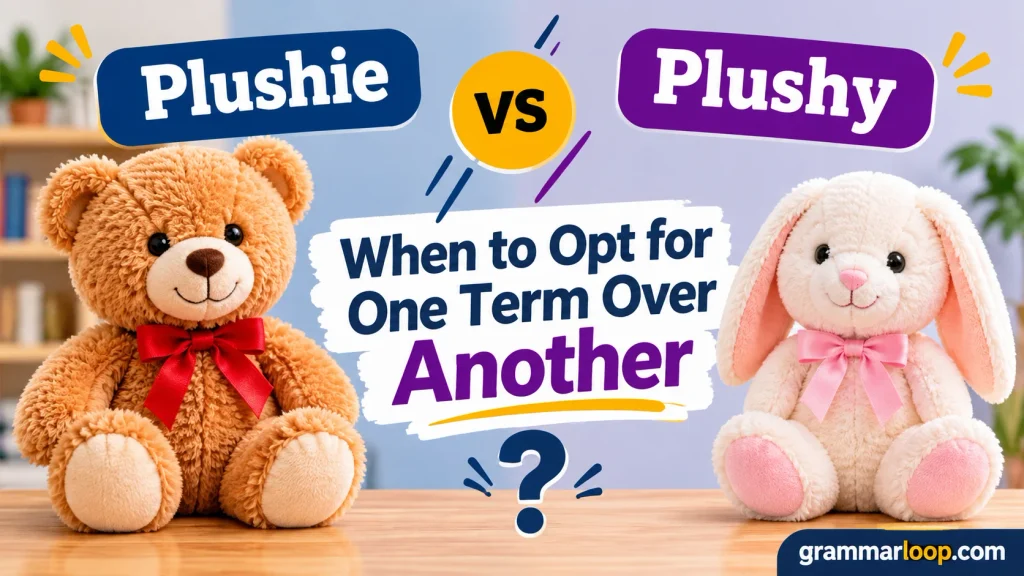
When comparing plushie vs plushy, you might wonder whether these two words have the same meaning or serve different purposes in everyday writing. Both terms are associated with soft, stuffed toys that people enjoy collecting, gifting, and cuddling. However, their spelling, usage, and popularity can vary depending on the context. The word plushie is commonly used as a noun to describe a soft, stuffed toy, such as a teddy bear or an adorable animal character. On the other hand, plushy is generally used as an adjective to describe something that feels soft, fluffy, or luxurious. Although the two words look and sound similar, understanding their differences can help you choose the right term when writing.
One important distinction between plushie and plushy is their grammatical function. A plushie refers directly to a toy, while plushy describes the texture or appearance of something. For example, you might say, “I bought a cute plushie for my little sister,” because you are talking about a stuffed toy. However, you could write, “This blanket feels plushy,” because you are describing its soft texture. Both expressions are understandable, but using them correctly makes your sentences sound more natural, clear, and professional. These small spelling differences matter, especially when you are creating articles, product descriptions, social media posts, or everyday messages.
Choosing between these two terms becomes easier when you understand their meaning, purpose, and common usage. If you are talking about a stuffed animal, collectible toy, or cuddly gift, plushie is usually the better choice. However, when describing something with a soft, thick, or comfortable texture, plushy is more appropriate. You may also encounter both words in online shopping, toy communities, and casual conversations, where their meanings can sometimes overlap. Paying attention to the sentence structure will help you avoid confusion and communicate your ideas effectively. Ultimately, knowing when to use plushie vs plushy allows you to make better word choices and improve your everyday English writing skills.
Plushie vs Plushy: The Short Answer
The simplest way to understand the difference is this:
- Plushie usually refers to a stuffed toy.
- Plushy typically describes something soft, luxurious, or plush, although it can occasionally refer to a stuffed toy.
Here’s a quick comparison:
| Feature | Plushie | Plushy |
| Main Role | Noun | Noun and adjective |
| Typical Meaning | Stuffed toy | Soft or plush item |
| Common Online Usage | Very high | Moderate |
| Collector Preference | Strongly preferred | Less common |
| Retail Usage | Common | Less common |
| Specificity | Highly specific | More general |
Quick Takeaway
If you’re talking about a stuffed toy, especially in modern online culture, plushie is usually the best choice.
If you’re describing texture, softness, or comfort, plushy often works better.
What Does “Plushie” Mean?
A plushie is a soft stuffed toy made from plush fabric and filled with materials such as cotton, polyester fiberfill, or similar stuffing.
The word has become incredibly popular among:
- Toy collectors
- Anime fans
- Video game communities
- Children’s toy markets
- Pop culture enthusiasts
Today, many people use plushie as a friendly and affectionate alternative to terms like:
- Plush toy
- Stuffed animal
- Stuffed toy
- Soft toy
Simple Definition
A plushie is a stuffed toy made from soft plush fabric.
The word often carries a sense of affection. Someone might refer to a favorite stuffed bear as their “favorite plushie” rather than simply calling it a toy.
Why People Like the Word
The term sounds:
- Friendly
- Cute
- Informal
- Personal
That’s one reason it became dominant in online communities.
Example Sentences
- My daughter sleeps with her bunny plushie every night.
- I bought a Pokémon plushie at the convention.
- The collector owns over 300 plushies.
What Does “Plushy” Mean?
Unlike plushie, plushy has two possible roles.
It can function as:
- An adjective
- A noun
Most commonly, it’s used as an adjective.
Plushy as an Adjective
When used as an adjective, plushy describes something that feels:
- Soft
- Luxurious
- Thick
- Comfortable
Examples:
- The hotel had plushy carpets.
- The couch felt incredibly plushy.
- She wore a plushy winter robe.
Plushy as a Noun
Sometimes people use plushy as a noun to mean a stuffed toy.
Examples:
- My child carries a plushy everywhere.
- She received a dragon plushy as a gift.
However, this usage is less common than plushie.
Why Plushy Can Cause Confusion
Because plushy often functions as an adjective, readers may not immediately know whether you’re referring to:
- A toy
- A texture
- A material
That’s why many writers prefer plushie when discussing stuffed toys.
The Origins of Plushie and Plushy
Understanding the history helps explain why these terms differ.
The Word “Plush”
Both words originate from plush, a fabric known for its soft, luxurious texture.
Historically, plush referred to:
- Upholstery fabrics
- Furniture coverings
- Luxury textiles
- Decorative materials
The fabric’s soft feel eventually inspired its use in toy manufacturing.
Development of Plushy
Plushy appeared first as a descriptive word.
People used it to describe items that felt:
- Rich
- Soft
- Thick
- Luxurious
Its adjective role remains its primary purpose today.
Development of Plushie
Plushie emerged later as a noun.
The suffix “-ie” often creates affectionate words in English.
Examples include:
| Base Word | Affectionate Form |
| Dog | Doggie |
| Bird | Birdie |
| Sweet | Sweetie |
| Plush | Plushie |
This pattern made plushie sound cute and approachable, which perfectly suited stuffed toys.
Read more: Waring vs Wearing: The Main Differences and When to Use Them
Plushie vs Plushy: The Core Differences Explained
Although both words are related, they serve different purposes.
| Category | Plushie | Plushy |
| Primary Use | Stuffed toy | Texture description |
| Grammar Role | Noun | Adjective and noun |
| Clarity | Very clear | Can be ambiguous |
| Popularity in Fandoms | Extremely high | Lower |
| Product Listings | Common | Rare |
| Collector Communities | Preferred | Less common |
Why Context Matters
Imagine these two sentences:
- I bought a new plushie.
- I bought a new plushy.
The first sentence immediately tells readers you purchased a stuffed toy.
The second sentence could mean several things depending on context.
Precision matters, especially in writing.
Is Plushie or Plushy More Popular?
Several factors contributed to this shift.
Internet Culture
Online communities helped popularize plushie.
Examples include:
- Gaming forums
- Anime fandoms
- Social media groups
- Collector communities
When discussing merchandise, fans overwhelmingly prefer plushie.
E-Commerce Trends
Major online retailers frequently categorize products under:
- Plushies
- Plush toys
- Character plushies
The term appears regularly in product titles and descriptions.
Social Media Influence
Platforms such as:
- TikTok
- YouTube
have further accelerated the popularity of plushie.
Many collectors create entire accounts dedicated to showcasing their plushie collections.
Why Plushie Won
Three main reasons explain its popularity:
- Greater specificity
- Cute, friendly sound
- Strong adoption by fandom communities
How Dictionaries Define Plushie and Plushy
Modern dictionaries increasingly recognize both terms.
Plushie Definitions
Most dictionaries define plushie as:
A stuffed toy made from plush fabric.
The definition is straightforward and widely accepted.
Plushy Definitions
Most dictionary entries define plushy as:
Soft, plush, luxurious, or covered in plush fabric.
Some dictionaries also acknowledge its noun form.
Important Observation
Dictionary recognition often follows usage.
Because millions of people now use plushie daily, the term has become firmly established in modern English.
Plushie vs Plushy in Modern Pop Culture
Pop culture played a huge role in shaping how these words are used today.
Gaming Communities
Video game franchises produce thousands of character plush toys annually.
Popular gaming plushies include characters from:
- Pokémon
- Minecraft
- Super Mario Bros.
- Sonic the Hedgehog
Fans almost always call these items plushies.
Anime Communities
Anime fandoms helped push plushie into mainstream English.
Convention attendees often purchase:
- Character plushies
- Mascot plushies
- Limited-edition plushies
The word has become part of fandom vocabulary.
Social Media Collectors
Collectors regularly share:
- Plushie displays
- Collection tours
- Rare plushie finds
- Custom plushie creations
The term plushie dominates hashtags and captions.
Regional Differences in Usage
Although plushie is widespread, usage varies slightly by region.
United States
In the United States, plushie has become extremely common.
People often use:
- Plushie
- Plush toy
- Stuffed animal
interchangeably.
United Kingdom
British English traditionally favored:
- Soft toy
- Teddy bear
- Stuffed toy
However, plushie has gained popularity through online communities.
Canada
Canadian usage closely resembles American English.
Plushie remains the preferred informal term.
Australia
Australian collectors and gamers commonly use plushie as well.
Global Trend
Across English-speaking countries, plushie continues to grow while plushy remains more common as an adjective.
When Should You Use “Plushie”?
There are many situations where plushie is the best option.
Referring to Stuffed Toys
Use plushie whenever discussing:
- Teddy bears
- Character merchandise
- Animal toys
- Collectibles
Examples:
- I bought a giant panda plushie.
- The convention sold exclusive plushies.
- Her room contains dozens of plushies.
Product Listings
Online sellers often prefer plushie because shoppers actively search for it.
Examples:
- Dragon Plushie
- Cat Plushie
- Dinosaur Plushie
Collector Discussions
Collectors overwhelmingly favor plushie.
Using the term helps you align with community expectations.
When Should You Use “Plushy”?
Plushy works best when describing texture or softness.
Describing Fabric
Examples:
- The blanket feels plushy.
- The chair has plushy cushions.
- The carpet is soft and plushy.
Casual Conversation
In informal speech, plushy occasionally refers to stuffed toys.
Example:
- My niece carries her plushy everywhere.
When an Adjective Is Needed
Compare these examples:
- The plushie is soft. ✔
- The plushy blanket feels wonderful. ✔
The second sentence requires an adjective, making plushy the better choice.
Plushie, Plushy, Plush Toy, Stuffed Animal, and Stuffed Toy
Many related terms overlap.
Here’s how they compare.
| Term | Meaning | Typical Context |
| Plushie | Stuffed toy | Collectors, fandoms |
| Plushy | Soft item or toy | Informal speech |
| Plush Toy | Formal product term | Retail |
| Stuffed Animal | Animal-shaped toy | Everyday use |
| Stuffed Toy | Broad category | General English |
Which Term Is Most Accurate?
It depends on context.
| Situation | Best Choice |
| Gaming merchandise | Plushie |
| Product catalog | Plush toy |
| Child’s toy | Stuffed animal |
| Describing softness | Plushy |
| Collector community | Plushie |
Common Grammar and Usage Mistakes
Even native speakers sometimes misuse these terms.
Mistake: Treating Them as Perfect Synonyms
While related, they aren’t identical.
Example:
- The plushy sofa looked comfortable. ✔
- The plushie sofa looked comfortable. ✘
Mistake: Using Plushie as an Adjective
Incorrect:
- The plushie carpet felt amazing.
Correct:
- The plushy carpet felt amazing.
Mistake: Ignoring Audience Expectations
If you’re writing for collectors, plushie feels more natural.
If you’re discussing furniture or fabric, plushy usually works better.
Mistake: Using Vague Language
Specific wording improves communication.
Instead of:
- I bought a plushy.
Consider:
- I bought a Pikachu plushie.
The second sentence provides immediate clarity.
Case Study: Why Toy Brands Prefer “Plushie”
Imagine two product titles.
Version A
Cute Penguin Plushy
Version B
Cute Penguin Plushie
Most toy collectors instantly recognize Version B as a stuffed toy.
Version A creates slight ambiguity.
That small difference matters in:
- Search results
- Marketing
- Product categorization
- Customer expectations
This clarity explains why many toy-focused brands favor plushie.
Interesting Facts About Plush Toys
Fact #1
The modern teddy bear dates back to the early 1900s.
Fact #2
Millions of plush toys are sold worldwide every year.
Fact #3
Collectors often seek limited-edition plushies that appreciate in value.
Fact #4
Many popular entertainment franchises generate significant merchandise revenue through plush toys.
Fact #5
Custom handmade plushies have become a thriving niche market.
A Simple Memory Trick
If you struggle to remember the difference, use this shortcut:
Plushie = Toy
Plushy = Soft
That’s not true in every situation, but it works most of the time.
Think of plushie as a specific object and plushy as a descriptive quality.
Conclusion:
Understanding the difference between plushie vs plushy helps you choose the right word for your writing. Although both terms are related to softness and stuffed toys, they have different meanings and uses. Plushie is a noun that refers to a soft, stuffed toy, often designed as an animal, character, or cute figure. On the other hand, plushy is an adjective that describes something soft, fluffy, or luxurious.
When writing about stuffed animals or collectible toys, use plushie. When describing the texture or appearance of something, choose plushy. Remembering this simple distinction will make your writing clearer and more accurate.
FAQs:
1. Is plushie or plushy the correct spelling?
Both plushie and plushy are correct words, but they have different meanings. Plushie is a noun for a stuffed toy, while plushy is an adjective meaning soft or fluffy.
2. What does plushie mean?
A plushie is a soft, stuffed toy made from fabric and filled with materials such as cotton or polyester. It often represents an animal, cartoon character, or fictional figure.
3. What does plushy mean?
Plushy describes something that feels soft, fluffy, thick, or comfortable. For example, you might describe a soft blanket or cushion as plushy.
4. Can I use plushie and plushy interchangeably?
No, they aren’t usually interchangeable. Use plushie when talking about a stuffed toy and plushy when describing something’s softness or texture.
5. Is plushie a formal or informal word?
Plushie is generally an informal and friendly word. It’s commonly used in everyday conversations, online shopping, toy collecting, and social media.


One Response